Colombia remains dependent on expensive imported gas
AI executive summary
The story at a glance, best enjoyed with a coffee ☕
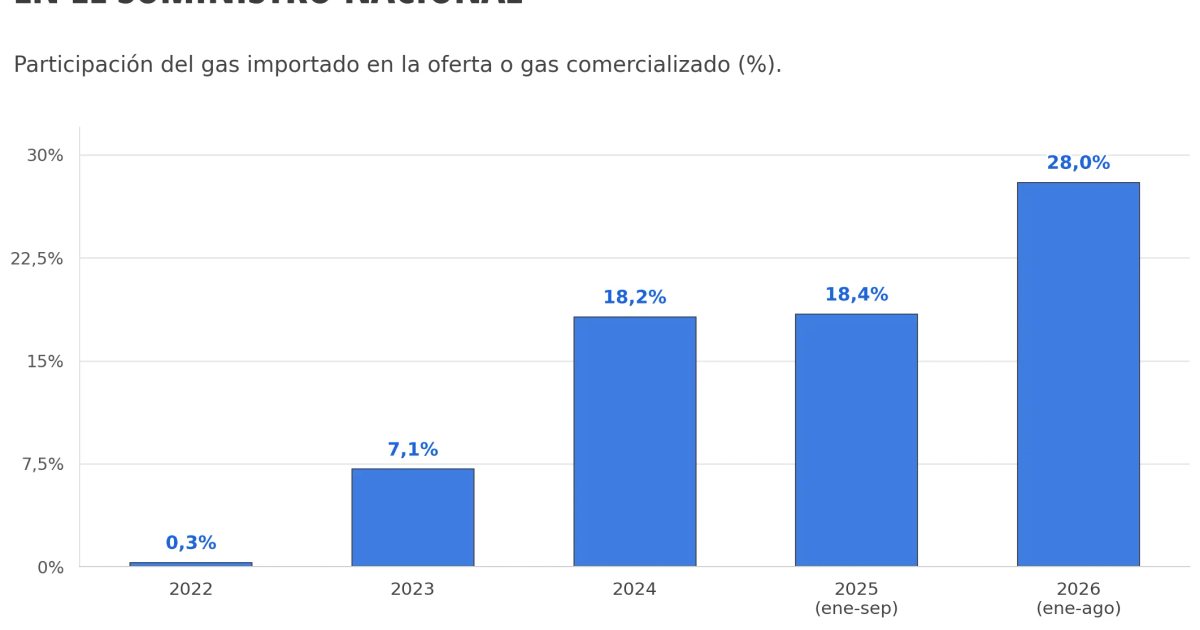
A recent failure at Cartagena's regasification plant exposed the fragility of gas supply in Colombia, where imports already represent 40% of total consumption. This dependence has grown significantly, rising from less than 1% in 2022 to 30-35% in 2026, due to a 31% drop in regulated production between 2021 and 2025. The government of Abelardo de la Espriella seeks short-term solutions such as reactivating the binational gas pipeline with Venezuela and launching two alternative regasification terminals by 2027, though without guaranteed supply. Meanwhile, former Petro government officials blame the current administration for not making adequate decisions to increase gas availability in the short term.
🔔 Sign in to follow this story and get its updates.
In this story you will find
AI analysis
Why it matters
Dependence on imported gas directly affects costs for residential users and businesses, in addition to generating vulnerabilities in the national energy system, especially during climate phenomena like El Niño.
▸▾ Rate, add sources or report this story
Sign in to rate this story and add sources.
Community annexes
Coverage of this same story by other outlets, contributed by readers and checked automatically.
Ask about this coverage
Get an AI answer grounded in reports from different outlets, with links to the sources.