Semana Tecnología ·
Giant black holes challenge cosmic theories
AI executive summary
The story at a glance, best enjoyed with a coffee ☕
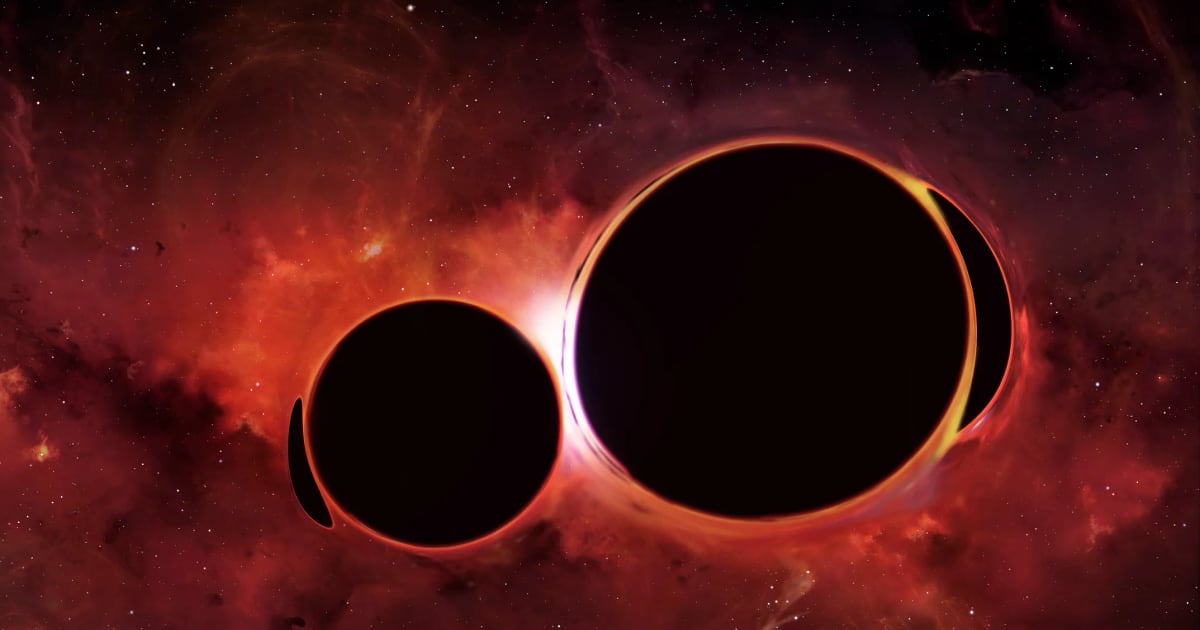
An international team led by Silvia Onorato has identified a system of two quasars called Nāpōwawāʻenakaulua that existed just 900 million years after the Big Bang. The surprising thing is that these black holes have masses of 1.5 billion and 400 million suns respectively, dimensions that challenge current scientific explanations for their growth so early in the universe's history. The discovery was possible thanks to observations from the James Webb Space Telescope and Gemini North in Hawaii, where atmospheric conditions allowed data collection in just two nights. Although researchers consider these objects might be in a region with exceptional matter concentration that facilitated their rapid growth, there's still the possibility that an object between Earth and the system has bent light, creating the appearance of two distinct sources.
ⓘ AI summary of reporting by Semana Tecnología · may change as coverage develops
🔔 Sign in to follow this story and get its updates.
More news
 Aly Umaña: cuatro años esperando justicia por muerte de su hijaEl Tiempo Bogotá
 Diplomas falsos en Colombia: penas de 4 a 12 años de prisiónInfobae Colombia
 Ejército captura en Necoclí a alias Abichurrio, financiero del Clan del GolfoInfobae Colombia
 Emcali realiza mantenimiento en acueducto de Cali con cortes de aguaPulzo
Sign in to rate this story and add sources.
Community annexes
Coverage of this same story by other outlets, contributed by readers and checked automatically.